Breast augmentation with Specialist Plastic Surgeon Dr Justin Perron
Breast Augmentation (augmentation mammoplasty) Brisbane
Breast augmentation (augmentation mammoplasty) is surgery that increases the size of the breasts or changes their shape, usually with silicone gel breast implants. Dr Justin Perron is a Specialist Plastic and Reconstructive Surgeon (FRACS) who performs breast augmentation in Brisbane, consulting from Herstellen Clinic in Spring Hill.
People come to talk about breast implants for different reasons. Some have lost volume after pregnancy, breastfeeding or weight loss. Some have breasts that are quite different in size, or a shape that developed differently. Others have simply felt for a long time that their breasts are out of proportion with the rest of their body. This page covers implant options, how surgery is done, recovery, costs, long-term implant care and the risks, so you have a clear picture before your consultation.
| Procedure | Breast augmentation (augmentation mammoplasty) with breast implants |
| Implants | TGA-approved silicone gel implants listed on the Australian Register of Therapeutic Goods (ARTG) |
| Anaesthetic | General anaesthetic |
| Operating time | Usually around 60 to 90 minutes |
| Hospital stay | Usually day surgery; some people stay one night |
| Time off work | Usually 1 to 2 weeks for desk-based work; longer for physical jobs |
| Exercise | Walking straight away; light exercise from about 2 to 3 weeks; most activity by about 6 weeks; chest and upper body work later, as advised |
| Final shape | Implants settle over roughly 3 to 6 months; scars keep fading for 12 months or more |
| Medicare | Cosmetic breast augmentation is not covered by Medicare or private health insurance |
| Where | Consultations at Herstellen Clinic, 490 Boundary Street, Spring Hill; surgery at accredited Brisbane hospitals |
During breast augmentation, a breast implant is placed behind each breast through a small incision. The implant adds volume and changes the shape and projection of the breast. The type, size and position of the implant are planned around your chest measurements, your breast tissue and what you would like to change.
Breast implants can also be used for other reasons, such as rebuilding a breast after mastectomy (breast reconstruction) or improving a noticeable difference between the two sides. Those situations are planned differently and may be treated as reconstructive surgery.
Breast augmentation changes the size and shape of the breasts. It does not lift breasts that have dropped significantly. If your nipples sit low on the breast, a breast lift (mastopexy) may be needed as well, either at the same time or as a separate operation.
You may be suitable for breast augmentation if you are in good general health and have clear reasons and realistic goals for surgery. Dr Perron will usually check the following:
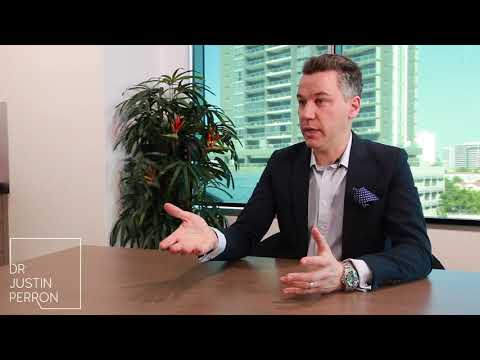
Check out this video of Dr Justin Perron discussing the topic of choosing the right implant for your augmentation.

Breast augmentation is done under general anaesthetic and usually takes about 60 to 90 minutes. Most people go home the same day. Dr Perron makes an incision, creates a pocket for the implant, places the implant and closes the incision in layers.
Breast augmentation is a cosmetic procedure, so the Medical Board of Australia guidelines for cosmetic surgery apply. In practice this means:
At your consultation Dr Perron will ask about your health and goals, examine and measure your breasts, take clinical photographs and talk through implant type, size, incision and placement. Bring any previous breast imaging and a list of your medicines.
To prepare, you will be asked to stop smoking and vaping, pause some medicines and supplements on advice, buy two or three front-opening, wire-free bras, and arrange someone to drive you home and stay with you for the first night.
Breast implants are not the right answer for everyone. These options are often compared:
| Best suited to | Main limitation | |
|---|---|---|
| Breast augmentation | Adding volume where breasts sit at a good height | Does not lift breasts that have dropped |
| Breast lift with implants (augmentation mastopexy) | Breasts that have lost volume and dropped | More scarring and a longer operation |
| Breast lift alone | Breasts that have dropped but have enough volume | Does not add upper fullness |
| Fat transfer | A small increase in size or correcting small differences | Limited volume per session; some fat is reabsorbed |
Read more about breast lift (mastopexy), fat grafting to the breasts and breast lift or breast augmentation. If you already have implants and want a change, see breast implant removal and replacement.
Recovery is different for everyone. Dr Perron will give you written instructions for your own situation. As a general guide:
| Time after surgery | What to expect |
|---|---|
| First 48 hours | Tightness, swelling and aching across the chest, managed with prescribed pain relief. Rest with your upper body raised. Short walks around the house. |
| Week 1 | Discomfort eases. Surgical bra worn day and night. First wound check. No lifting heavier than a full kettle and no reaching above your head. |
| Weeks 1 to 2 | Many people return to desk work. Driving is usually possible once you are off strong pain relief and can turn the wheel and brake comfortably. |
| Weeks 2 to 6 | Light exercise such as walking and stationary cycling. Keep wearing your support bra. Sleep on your back. Avoid lifting, running and upper body exercise. |
| Week 6 | Review appointment. Most activities resume gradually once you are cleared. Chest and upper body exercises are usually reintroduced later and slowly. |
| 3 months | Implants have usually settled lower and softened. Underwire bras are often fine from here, if Dr Perron agrees. |
| 6 to 12 months | Final shape becomes clearer. Scars continue to fade from pink to paler. |
For practical tips, see our articles on recovery tips after breast augmentation and sleeping and eating after breast implant surgery.
All incisions leave a scar. With an inframammary incision, the scar sits in or just above the breast fold and is usually hidden by a bra or bikini top. Scars are often pink and slightly raised at first, then flatten and fade over 12 to 18 months. Some people form thicker (hypertrophic) or keloid scars, which may need extra treatment. Silicone gel or tape and sun protection may be recommended once the wound has healed.
All breast implants used in Australia must be approved by the Therapeutic Goods Administration (TGA) and listed on the ARTG. Breast implants are Class III medical devices, which is the highest-risk class for implantable devices. Dr Perron will go through the options with you and explain how each choice affects the result and the risks.
Most breast augmentations in Australia use silicone gel implants. Modern implants are filled with a cohesive gel that holds together if the shell is damaged. Saline implants are filled with salt water and are rarely used in Australia today.
Round implants are the same shape all the way around and tend to add more fullness to the upper part of the breast. Anatomical, or teardrop, implants are fuller at the bottom and taper towards the top. Teardrop implants have a textured surface to help them stay in position, but they can still rotate, which changes the shape of the breast.
Implant shells are either smooth or textured. Textured implants are linked to a rare cancer of the immune system called breast implant associated anaplastic large cell lymphoma (BIA-ALCL). In 2019 the TGA took action on a range of textured implants and some were removed from the Australian market. Dr Perron will explain which surfaces are suitable for you and why.
Implant volume is measured in cubic centimetres (cc), usually between about 125 cc and 700 cc. Profile describes how far the implant projects forward from the chest: low, moderate, high or extra high. Cup sizes vary a lot between bra brands, so implant size is chosen from measurements of your chest width, breast base and skin stretch rather than a target cup size. More information is in our guide to choosing the size and shape of your implants.
| Choice | Options | What it changes |
|---|---|---|
| Fill | Cohesive silicone gel (most common); saline (rarely used) | How the implant feels and behaves if the shell is damaged |
| Shape | Round; anatomical (teardrop) | Fullness in the upper vs lower breast; risk of rotation with teardrop implants |
| Surface | Smooth; textured | Movement in the pocket; textured surfaces are linked to BIA-ALCL |
| Profile | Low, moderate, high, extra high | How far the breast projects for a given width |
| Size | Roughly 125 cc to 700 cc | Overall volume, chosen from chest and breast measurements |
All surgery carries risks, and breast implants carry some risks that continue for as long as the implants are in place. Some complications need further surgery, including removal or replacement of the implants.
General surgical risks include bleeding, infection, reactions to the anaesthetic, blood clots in the legs or lungs, and chest infection.
Risks specific to breast implants include:
BIA-ALCL is a rare cancer of the immune system that can develop in the fluid or scar capsule around a breast implant. In Australia, cases have occurred in people with textured or polyurethane implants. The TGA estimates the risk for women with textured implants at between 1 in 1,000 and 1 in 10,000. It most often appears as swelling of the breast several years after surgery. Removing implants that are not causing symptoms is not recommended, but any new swelling, lump or change should be checked promptly.
Some people with breast implants report symptoms such as fatigue, joint pain, memory problems or rashes, often described as breast implant illness. These symptoms are not yet well understood and there is no specific test for them. If you have concerns, speak with your GP and Dr Perron. For more detail, see our page on surgical risks.
Dr Perron’s surgeon’s fee for breast augmentation typically ranges from $7,000 to $15,000. This is the surgeon’s fee only. You will get an itemised written quote after your consultation.
As well as the surgeon’s fee, your quote will include:
Cosmetic breast augmentation is not covered by Medicare or private health insurance. Breast implants used in reconstruction after breast cancer, or for some significant developmental conditions, may be treated differently. Dr Perron will explain this at your consultation. Your quote will also set out the likely costs if further surgery is needed later.
DISCLAIMER: Please be advised that each patients results will vary and specific outcomes are not guaranteed. Please be aware that all procedures carry risks, therefore, we encourage patients to consult with their regular GP and Qualified Specialist Plastic Surgeon before considering surgery.


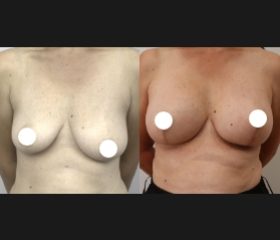
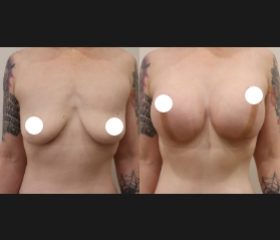
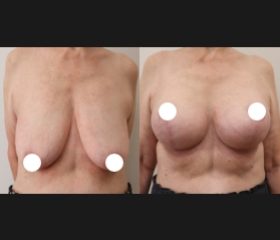
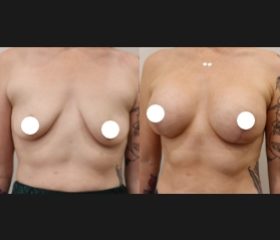
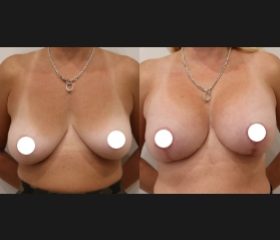
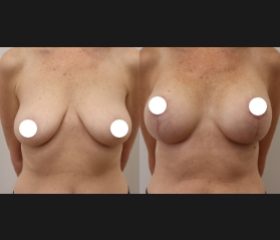
You can view examples in our breast augmentation before and after gallery. The photos show individual patients only. Your result will depend on your own anatomy, healing and the implant chosen.
These guides go into more detail on the questions patients ask us most often about breast augmentation.
Dr Perron’s surgeon’s fee for breast augmentation typically ranges from $7,000 to $15,000. Anaesthetist, hospital, implant and garment costs are extra. You will receive an itemised written quote after your consultation, including the likely costs if further surgery is needed in the future.
No, not when it is done for cosmetic reasons. Breast implants used in reconstruction after breast cancer, or for some significant developmental breast conditions, may be treated differently. Dr Perron can explain whether any Medicare item applies to you at your consultation.
There is no single best age. Your breasts should be fully developed, and many people wait until they have finished having children. For anyone under 18, Medical Board of Australia guidelines require a three-month cooling-off period and an independent assessment before cosmetic surgery.
Dr Perron uses silicone gel breast implants approved by the TGA and listed on the Australian Register of Therapeutic Goods. The shape, surface, profile and size are chosen with you at your consultation, based on your measurements, breast tissue and goals.
Round implants tend to add more upper fullness. Teardrop implants are fuller at the bottom and taper at the top, but they can rotate and have a textured surface. Which suits you depends on your breast shape, tissue cover and goals, and Dr Perron will talk you through both.
Size is measured in cc rather than cup size. Dr Perron measures your chest width, breast base and skin stretch to work out a range that fits your frame. Bra cup sizes vary between brands, so it helps to think about proportion and bring photos of shapes you like.
The 45:55 rule comes from research on breast shape. It suggests that a natural-looking breast often has about 45 per cent of its volume above the nipple and 55 per cent below. Surgeons may use it as a loose guide when planning implant shape and position, alongside your own anatomy.
Implants can sit under the breast tissue, under the chest muscle, or in a dual plane where the upper part is under the muscle. The best position depends on how much natural breast tissue you have, your build and your activity level. Dr Perron will recommend an option after examining you.
Most people return to desk work after one to two weeks and resume most activities by about six weeks. Chest and upper body exercise is reintroduced later. The implants usually settle and soften over about three months, and the final shape is clearer by six to twelve months.
Breast implants are not lifetime devices. The TGA notes they are often removed or replaced after 10 to 15 years, and the chance of further surgery rises the longer they are in place. Some people keep their implants longer without problems, so regular check-ups matter.
Many people can breastfeed after breast augmentation, but it cannot be guaranteed. Incisions around the areola and some implant positions may affect milk ducts or nerves. If breastfeeding in future matters to you, tell Dr Perron so it can be considered when planning your surgery.
Implants can hide some breast tissue on a mammogram. Tell the radiographer you have implants so they can take extra views. BreastScreen services do screen women with implants, and you should keep up with screening as recommended for your age.
BIA-ALCL is a rare immune system cancer linked mainly to textured implants. The TGA estimates the risk for women with textured implants at between 1 in 1,000 and 1 in 10,000. Removal is not advised if you have no symptoms, but new swelling, a lump or pain should be checked promptly.
Breast implant illness is a term people use for symptoms such as tiredness, joint pain, poor concentration or rashes that they relate to their implants. These symptoms are not yet well understood and there is no test for them. If you have concerns, talk to your GP and Dr Perron about your options.
Yes, every incision leaves a scar. With a breast fold incision the scar usually sits in or near the crease and is covered by a bra. Scars start pink and fade over 12 to 18 months, although some people form thicker scars that need extra care.
Yes. If your breasts have lost volume and dropped, implants can be combined with a breast lift (augmentation mastopexy), either in one operation or in two stages. This adds scarring and operating time, so Dr Perron will explain which approach suits you.
Yes. Under Medical Board of Australia guidelines you need a referral, at least two consultations, a body dysmorphic disorder screening questionnaire and a cooling-off period of at least seven days after consent before booking. For people under 18 the cooling-off period is at least three months.
Ask about their specialist registration and training, how many augmentations they perform, which implants they use and why, the risks that apply to you, the total cost including future surgery, and what follow-up care is included. Our guide to finding the right surgeon in Brisbane has more questions.
Breast implants are a long-term decision, so it is worth checking your surgeon’s background carefully. Here is what you can verify about Dr Justin Perron:
Dr Perron will give you an honest view of what implants can and cannot do for you, including when another option may suit you better. To book a consultation, ask your GP for a referral and call 07 3861 8800, or book online via HotDoc.
The information on this page is general in nature and is not a substitute for personal medical advice. Any surgical or invasive procedure carries risks. Before proceeding, you should seek a second opinion from an appropriately qualified health practitioner. Individual results vary and specific outcomes cannot be guaranteed. We encourage you to speak with your GP and a Specialist Plastic Surgeon about your circumstances, including the risks, recovery and costs, before deciding on surgery. Breast implants are TGA-regulated medical devices; information about the devices used will be provided at your consultation.
Dr Justin Perron, MBBS FRACS (Plastics), Specialist Plastic and Reconstructive Surgeon, AHPRA Registration No. MED0000959827.
Have a question about one of our procedures? Simply enter your details in the form below and one of our friendly team members will be in touch ASAP.
490 Boundary Street
Spring Hill QLD 4000