MED0000959827 - This website contains imagery which is only suitable for audiences 18+. All surgery contains risks, Read more here.

Tummy Tuck (Abdominoplasty) Brisbane

Removing loose skin and fat, repairing separated muscles and reshaping the abdomen.

Tummy Tuck (Abdominoplasty) Brisbane

Dr Justin Perron, Specialist Plastic Surgeon, Spring Hill

Abdominoplasty in Brisbane: treatment overview

An abdominoplasty (tummy tuck) is surgery to remove loose skin and excess fat from the lower abdomen and, where needed, repair separated abdominal muscles. Dr Justin Perron is a Specialist Plastic and Reconstructive Surgeon (MBBS, FRACS) who performs abdominoplasty for women and men from his rooms at Herstellen Clinic in Spring Hill, Brisbane.

Most people who ask about a tummy tuck have tried the obvious things already. They eat well, they train, and the lower tummy still doesn’t change. That’s usually because the problem isn’t fat alone. Skin that has been stretched by pregnancy or a large weight loss doesn’t spring back, and muscles that have pulled apart (rectus diastasis) won’t knit together with sit-ups. Surgery is one option for these changes. It isn’t the right option for everyone, and part of Dr Perron’s job at consultation is helping you work out whether it’s right for you.

Have a Question?

×

Complete the form below and our experienced staff will be in touch ASAP


Get in Touch

Abdominoplasty at a glance

TopicWhat to expect*
AnaestheticGeneral anaesthetic in an accredited private hospital
Operating timeUsually 2 to 4 hours, longer if combined with other procedures
Hospital stayUsually 1 to 3 nights, depending on the extent of surgery
DrainsSometimes used for several days to remove fluid
Compression garmentWorn for around 6 weeks
Time off workOften 2 to 4 weeks for desk-based work; longer for physical jobs
ExerciseWalking from day one; strenuous exercise usually avoided for at least 6 weeks
ScarLow across the lower abdomen; continues to mature for 12 to 18 months
MedicareA rebate may apply only if strict MBS criteria are met (items 30175 or 30177)
Surgeon’s feeFrom $10,000 to $22,800 (surgeon’s fee only; other fees apply)

*General guide only. Your plan, recovery and costs depend on your health, anatomy and the type of surgery performed, and will be discussed at consultation.

What is an abdominoplasty?

Abdominoplasty is a body contouring operation. Through a low incision that usually sits within the underwear or bikini line, the surgeon lifts the abdominal skin, removes the loose skin and fat below the belly button, and then closes the remaining skin. If the two vertical “six-pack” muscles (rectus abdominis) have separated, they can be stitched back together with permanent sutures at the same time. In a full abdominoplasty, the belly button stays attached to its stalk and is brought out through a new opening in the tightened skin.

It’s worth being clear about what a tummy tuck is not. It isn’t a weight-loss operation, and it isn’t a substitute for diet and exercise. It works best for people who are at, or close to, a weight they can hold steady.

What concerns can a tummy tuck address?

People come to see Dr Perron about abdominoplasty for both physical and appearance-related reasons. The most common include:

  • Loose or overhanging skin after pregnancy or significant weight loss
  • Separated abdominal muscles (rectus diastasis), which can cause a bulge that doesn’t respond to exercise
  • Skin irritation and rashes (intertrigo) in the fold beneath an overhanging apron of skin
  • Stubborn lower abdominal fat sitting under stretched skin
  • Stretch marks below the belly button, where they sit on the skin that is removed
  • Abdominal wall weakness, and in selected cases a small umbilical or ventral hernia that can be repaired during the same operation

Types of tummy tuck

There isn’t a single “tummy tuck”. The operation is planned around how much loose skin you have, where it sits and whether the muscles need repair. Dr Perron will talk you through the options that suit your body.

TypeBest suited toScar
Full abdominoplastyLoose skin above and below the belly button, often with muscle separationHip to hip, plus a scar around the belly button
Mini abdominoplastyA small amount of loose skin below the belly button only; no muscle repair above the navelShorter low scar; belly button usually not repositioned
Extended abdominoplastyLoose skin that wraps around the flanks (love handles)Longer low scar that extends around the hips
Fleur-de-lis abdominoplastyLarge amounts of loose skin both vertically and horizontally, often after major weight lossLow horizontal scar plus a vertical midline scar
LipoabdominoplastyPeople who would also benefit from liposuction of the flanks or upper abdomenAs for full abdominoplasty
Body lift (circumferential lipoabdominoplasty)Loose skin around the whole waist, buttocks and back after massive weight lossScar runs right around the waist

If you’ve lost a large amount of weight and the loose skin continues around your back, a body lift may be the more appropriate operation. If your skin is firm and the issue is mainly fat, liposuction on its own may be enough.

Am I a suitable candidate for abdominoplasty?

You may be a suitable candidate if you:

  • Have loose abdominal skin, muscle separation, or both, that hasn’t improved with diet and exercise
  • Are at a stable weight and have been for at least 6 to 12 months
  • Don’t smoke or vape, or are prepared to stop well before and after surgery
  • Have finished having children, or are prepared to wait until you have
  • Are in good general health, with any medical conditions well controlled
  • Have realistic expectations about the scar, the recovery and what surgery can change

Surgery may need to wait, or may not be advisable, if you’re still losing weight, plan another pregnancy, have a higher BMI, smoke, have poorly controlled diabetes or heart or lung disease, or have a history of blood clots. These factors raise the risk of complications. Dr Perron will go through your medical history carefully and may suggest steps to take first. Our article on when to have a tummy tuck covers timing in more detail.

Tummy tuck after pregnancy and rectus diastasis

Pregnancy stretches the skin and the abdominal wall. For many women the skin settles. For others, a pouch of loose skin and a central bulge remain long after the baby arrives, even with dedicated physiotherapy. The bulge is often caused by rectus diastasis, where the connective tissue between the two rectus muscles has widened.

During a full abdominoplasty, Dr Perron can bring these muscles back together (plication) before closing the skin. Since November 2022, the Medicare Benefits Schedule has included an item (30175) for abdominoplasty with diastasis repair after pregnancy, but only for patients who meet specific clinical criteria. These are outlined in the cost section below. You can read more in our guide to diastasis recti.

Most surgeons recommend waiting at least 6 to 12 months after your last pregnancy, and after you’ve finished breastfeeding, before having surgery. Some women choose to combine abdominoplasty with a breast lift, or have breast augmentation alongside a tummy tuck. Women with heavy breasts sometimes ask about breast reduction as a combined procedure too. Combining procedures means one recovery, but also a longer operation, so Dr Perron will discuss whether it is sensible in your case.

Abdominoplasty after significant weight loss

After bariatric surgery or a large weight loss, the skin often hangs as an “apron” (pannus) that can rub, sweat and break down. For these patients, abdominoplasty may be performed as a functional operation as well as an aesthetic one. Your weight should be stable for at least 6 months before surgery, and your surgeon will check nutrition and iron levels, which can be low after weight-loss surgery. Where loose skin extends right around the trunk, a body lift or a staged plan that also includes the arms or thighs may be discussed.

Your consultation with Dr Perron

Your first appointment is a chance to talk through what bothers you, what you’d like to change and what is realistic. Dr Perron will examine your abdomen, check for muscle separation and hernias, and look at skin quality, existing scars and fat distribution. He’ll explain the options, the scar you can expect, the risks and the recovery.

In Australia, cosmetic surgery is governed by Medical Board of Australia guidelines that came into effect on 1 July 2023. For a cosmetic abdominoplasty, this means:

  • You’ll need a referral from your GP or another medical practitioner who doesn’t work with the surgeon
  • You’ll have at least two pre-operative consultations, and at least one of these will be in person with Dr Perron
  • There is a cooling-off period of at least 7 days after giving informed consent before you can pay a deposit or book surgery
  • You’ll be screened for underlying psychological factors, including body dysmorphic disorder, which is a standard part of safe care
  • You’ll receive written information about the procedure, risks, recovery and full costs

Where surgery is being considered for medical reasons under Medicare, you’ll also need a valid specialist referral, and supporting documents (such as imaging or records of treatment) will be reviewed.

How to prepare for a tummy tuck

  • Stop smoking and vaping for at least 6 weeks before and after surgery, as nicotine reduces blood flow to the skin and increases wound problems
  • Aim to reach a stable, comfortable weight before booking
  • Tell Dr Perron about all medicines, supplements and herbal products. Some, such as aspirin, fish oil and certain anti-inflammatories, may need to be stopped beforehand
  • Arrange for someone to drive you home and help at home for the first week or two, especially if you have young children
  • Set up a recovery area with pillows to support a slightly bent position, plus easy-to-reach essentials
  • Plan time off work and avoid booking holidays or flights for the first few weeks after surgery

What happens during abdominoplasty surgery?

Your operation is performed under general anaesthetic in an accredited private hospital in Brisbane, with a specialist anaesthetist. The steps usually include:

  • Marking: before surgery, Dr Perron marks the planned incisions while you are standing, so the scar sits as low and as even as possible
  • Incision: a low horizontal incision is made above the pubic area, usually from hip to hip for a full abdominoplasty
  • Muscle repair: the separated rectus muscles are brought together with permanent sutures if needed
  • Skin removal and closure: the skin is drawn down, the excess is removed and the wound is closed in layers
  • Belly button: in a full abdominoplasty, the belly button is brought out through a new opening and stitched in place
  • Dressings and drains: dressings, and sometimes drains, are applied, followed by a compression garment

Liposuction of the flanks or upper abdomen can be added when it suits your shape. Blood clot prevention, such as compression stockings, calf compressors and in some cases blood-thinning injections, is used during and after surgery.

Tummy tuck recovery timeline

Recovery is different for everyone, and it depends on the type of surgery. The timeline below is a general guide. Dr Perron will give you written instructions specific to your operation.

TimeframeWhat usually happens
Days 1 to 3Hospital stay. You’ll walk with help on the first day, slightly bent at the waist. Pain is managed with medication.
Week 1Rest at home. Short, frequent walks help reduce the risk of blood clots. Drains, if used, are usually removed in the rooms.
Weeks 2 to 3Wound check in the rooms. Many people return to light desk work. You’ll gradually stand straighter.
Weeks 4 to 6Swelling continues to settle. Driving is usually possible once you can brake hard without pain and are off strong pain relief.
Weeks 6 to 12Most people are cleared to slowly return to the gym and lifting. Core work is reintroduced gradually.
3 to 18 monthsSwelling resolves and the scar flattens and fades. The final shape becomes clearer over this time.

Gentle walking matters. It helps prevent deep vein thrombosis (DVT) and chest infections, and most people feel better for it. Heavy lifting, including lifting small children, should be avoided until you’re cleared. For practical tips, see our abdominoplasty recovery guide.

Tummy tuck scars: what to expect

Every abdominoplasty leaves a scar. A full tummy tuck leaves a low horizontal scar that usually runs from hip to hip, plus a scar around the belly button. Dr Perron plans the incision so it sits as low as possible and can usually be hidden by underwear or swimwear, although styles and individual anatomy vary.

Scars tend to look red and raised for the first few months and then gradually flatten and fade over 12 to 18 months. Some people form thicker scars (hypertrophic or keloid scars), and these may need extra treatment. Silicone tape or gel, sun protection and not smoking all help the scar mature. Read more about caring for your abdominoplasty scar.

Risks and possible complications of abdominoplasty

All surgery carries risk. Abdominoplasty is a major operation, and it’s important to understand the risks before deciding to go ahead. General risks of surgery and anaesthesia include bleeding, infection, pain, reactions to medicines and anaesthetic, and blood clots in the legs (DVT) or lungs (pulmonary embolism).

Risks more specific to abdominoplasty include:

  • Fluid collection under the skin (seroma), which may need draining in the rooms
  • Blood collection (haematoma), which may need a return to theatre
  • Wound healing problems, particularly at the centre of the scar, which are more common in smokers and people with diabetes
  • Loss of some skin or fat tissue due to poor blood supply (skin or fat necrosis)
  • Numbness of the lower abdominal skin, which may last months or be permanent
  • Thickened, wide or raised scars
  • Asymmetry or contour irregularities, including small “dog ears” at the ends of the scar
  • Problems with the appearance or blood supply of the belly button
  • Swelling of the lower abdomen that takes months to settle
  • Tiredness for several weeks after surgery
  • The need for further surgery (revision) in some cases

Your individual risk depends on factors such as smoking, weight, diabetes and the extent of surgery. Dr Perron will discuss these openly with you. Please read more about the risks of surgery and speak with your GP before making a decision.

How much does a tummy tuck cost in Brisbane?

Dr Perron’s surgeon’s fee for abdominoplasty ranges from $10,000 to $22,800. This range reflects the surgeon’s fee only. Your total cost will also include:

  • Anaesthetist’s fee
  • Hospital and theatre fees (which depend on your length of stay and whether you have private health insurance)
  • Surgical assistant’s fee
  • Compression garment fees
  • Any pathology, imaging or medicines

Cost varies with the type of abdominoplasty, whether muscle repair or liposuction is included, how long the operation takes and the hospital used. You’ll receive an individual written quote after your consultation, before you commit to surgery.

Is a tummy tuck covered by Medicare?

A purely cosmetic tummy tuck is not covered by Medicare or private health insurance. However, Medicare rebates may apply in two situations where strict clinical criteria are met:

  • MBS item 30175 (after pregnancy): abdominoplasty with repair of rectus diastasis where the separation is at least 3 cm on prior imaging, you have documented abdominal wall pain or urinary or back symptoms related to the defect, conservative treatment including physiotherapy has not helped, and you have not been pregnant in the last 12 months.
  • MBS item 30177 (after significant weight loss): removal of redundant abdominal skin and fat where a skin condition such as intertrigo has not responded to at least 3 months of treatment, the excess tissue interferes with daily activities, and your weight has been stable for at least 6 months.

Meeting these criteria may also allow your private health fund to contribute to hospital costs, depending on your level of cover. A Medicare rebate does not cover the whole surgeon’s fee, so there will still be an out-of-pocket cost. Dr Perron will assess your eligibility and explain the figures at your consultation. Our article on Medicare cover for abdominoplasty explains how these item numbers work.

Tummy tuck vs liposuction: which is right for me?

Liposuction removes fat. It doesn’t remove skin and it can’t repair muscle separation. If your skin is still firm and the issue is a pocket of fat, liposuction may be enough. If you have loose skin, a bulge from separated muscles, or both, an abdominoplasty is usually needed to address them. Many patients end up with a combination of both. Dr Perron will recommend an approach based on your examination rather than a preferred procedure. You can compare the two in more detail in our article on abdominoplasty or liposuction.

Abdominoplasty before and after gallery

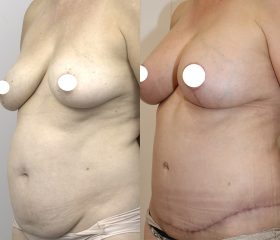
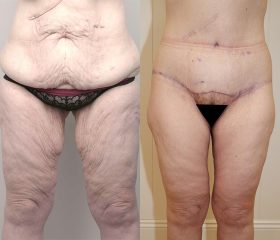
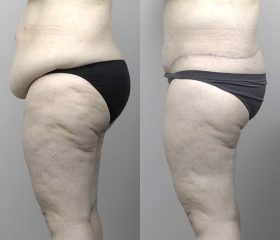
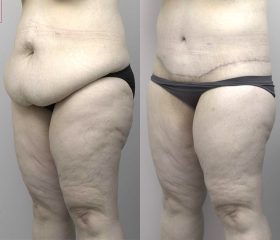
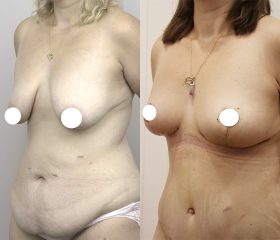
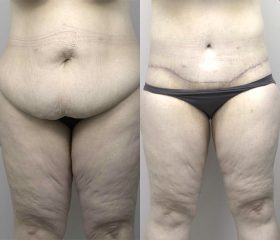
You can view abdominoplasty before and after photos from Dr Perron’s patients in our gallery. These images show results for individual patients and are not a prediction of your outcome. Results vary between people.

DISCLAIMER: Please be advised that each patient’s results will vary and specific outcomes are not guaranteed. Please be aware that all procedures carry risks, therefore, we encourage patients to consult with their regular GP and Qualified Specialist Plastic Surgeon before considering surgery.

VIEW ALL

Frequently asked questions about tummy tuck surgery

Why do people choose to have an abdominoplasty?

People usually consider an abdominoplasty when loose skin, stretched muscles or stubborn lower tummy fat remain after pregnancy or weight loss despite diet and exercise. Some have physical issues such as rashes under a skin fold or a bulge from muscle separation. Others are concerned about appearance. Dr Perron will discuss whether surgery suits your goals.

Does a tummy tuck hurt?

You’re asleep under general anaesthetic during the operation, so you won’t feel it. Afterwards, the abdomen will feel tight, sore and swollen, especially in the first week and if the muscles were repaired. Pain is managed with medication in hospital and at home, and most people find it eases noticeably over the first two weeks.

Will I have visible scars after abdominoplasty?

Yes. A tummy tuck always leaves a scar. In a full abdominoplasty it usually runs low from hip to hip, with a second scar around the belly button. Dr Perron places it as low as possible so it can usually sit under underwear or swimwear. Scars fade and flatten over 12 to 18 months, but they don’t disappear.

How long until I see results from a tummy tuck?

You’ll notice a change in shape straight after surgery, but swelling hides the final result. Most swelling settles over about 6 weeks to 3 months, with some lingering for longer. The scar continues to mature for 12 to 18 months. Your outcome depends on your anatomy, healing and the type of surgery.

What can a tummy tuck change, and what can't it change?

An abdominoplasty can remove loose lower abdominal skin and fat and tighten separated muscles, giving a firmer, flatter contour for many people. It can’t treat fat inside the abdomen around the organs, replace weight loss, or remove stretch marks above the area of skin that is excised. Results vary between individuals and are not guaranteed.

How long do tummy tuck results last?

The skin and fat removed during surgery don’t come back, and repaired muscles are held with permanent sutures. Your body will still age, though, and weight gain or a future pregnancy can stretch the skin and muscles again. Keeping a stable weight is the most useful thing you can do to maintain your result over the years.

How much does a tummy tuck cost in Brisbane?

Dr Perron’s surgeon’s fee for abdominoplasty ranges from $10,000 to $22,800. Hospital, anaesthetist, assistant and garment fees are charged separately. If you meet Medicare criteria under item 30175 or 30177, a rebate may apply and your health fund may cover some hospital costs. You’ll receive a written quote after consultation.

What is the difference between a full and mini tummy tuck?

A mini tummy tuck uses a shorter incision and treats a small amount of loose skin below the belly button only. The belly button usually isn’t moved. A full tummy tuck uses a hip-to-hip incision, addresses skin above and below the navel, and allows the muscles to be repaired along their length. Recovery after a mini procedure is usually a little shorter.

Can a tummy tuck be combined with other procedures?

Yes. Abdominoplasty is often combined with liposuction of the flanks, and some people combine it with breast surgery after pregnancy. It can also form part of a body lift after major weight loss. Combining procedures means one anaesthetic and one recovery, but a longer operation and higher risk, so Dr Perron will advise whether it suits you.

Is liposuction enough, or do I need a tummy tuck?

That depends mostly on your skin. If your skin is still firm and you’re concerned about a pocket of fat, liposuction may be enough. If you have loose or overhanging skin, or a bulge from separated muscles, liposuction can’t fix these and may make loose skin look worse. An abdominoplasty addresses all three.

Is abdominoplasty covered by Medicare in Australia?

A cosmetic tummy tuck isn’t covered. Medicare may contribute when strict criteria are met: item 30175 covers diastasis repair after pregnancy with a gap of 3 cm or more and related symptoms, and item 30177 covers removal of excess skin after significant weight loss that causes skin problems and affects daily life. Eligibility is assessed at consultation.

What might rule me out of having a tummy tuck right now?

You may be advised to wait if you smoke or vape, are still losing weight, plan another pregnancy, have a high BMI, or have poorly controlled diabetes, heart or lung disease. A history of blood clots also needs careful assessment. These factors increase risk. In many cases, surgery becomes an option once they are addressed.

Is there a best age for a tummy tuck?

There isn’t a set age. What matters more is your general health, a stable weight and having finished your family. Many women have an abdominoplasty in their 30s, 40s or 50s, and older adults in good health may also be suitable. Dr Perron assesses your medical fitness for surgery rather than relying on age alone.

How much weight will I lose with a tummy tuck?

A tummy tuck isn’t a weight-loss operation. The weight of skin and fat removed varies widely between people, and the change on the scales is often less than expected. Many people notice a difference in how their clothes fit rather than in their weight. The aim is to improve shape, not reduce body weight.

Can I get pregnant after a tummy tuck?

Yes, pregnancy after an abdominoplasty is possible and is generally safe for the baby. However, pregnancy can stretch the skin again and separate the repaired muscles, which may undo much of the change. For this reason, most surgeons recommend waiting until you have finished having children before having surgery.

Will a tummy tuck remove stretch marks?

Only partly. Stretch marks on the skin below the belly button are often removed along with the excess skin. Stretch marks above the belly button remain, although they may move lower and look a little different once the skin is tightened. A tummy tuck isn’t a treatment for stretch marks on their own.

How much time off work will I need after a tummy tuck?

Many people with desk-based jobs return to work after 2 to 4 weeks. If your job involves lifting, bending or standing for long periods, you may need 6 weeks or more. You’ll also need help at home for the first week or two. Dr Perron will give you advice based on your surgery and your work.

Can men have a tummy tuck?

Yes. Men also develop loose abdominal skin, often after significant weight loss, and may have muscle separation. The procedure is similar, although men often carry more fat inside the abdomen, which surgery can’t remove. Abdominoplasty for men is frequently combined with liposuction of the flanks, and sometimes with male breast reduction.

Why choose Brisbane Plastic Surgeon Dr Perron for abdominoplasty in Brisbane

Choosing a surgeon is a personal decision. Here are some things to consider about Dr Perron’s training and approach to abdominoplasty:

  • Specialist Plastic and Reconstructive Surgeon. Dr Perron holds a Fellowship of the Royal Australasian College of Surgeons (FRACS) in Plastic and Reconstructive Surgery, the Australian Medical Council accredited qualification for specialist plastic surgeons. AHPRA registration: MED0000959827.
  • Medical training in Australia and Canada. He studied chemistry and biochemistry at the University of Calgary before completing his medical degree (MBBS) at Flinders University in Adelaide.
  • Broad surgical training. His plastic surgery training took place across South East Queensland and Perth, with experience in hospitals in Townsville, Brisbane, Redcliffe, Caboolture and the Gold Coast.
  • Reconstructive and cosmetic experience. Dr Perron’s practice includes breast reconstruction, skin cancer surgery and hand surgery as well as body contouring. Reconstructive work demands careful handling of skin blood supply and wound healing, which are central to abdominoplasty.
  • A full range of body procedures. He performs abdominoplasty, body lift, liposuction, arm and thigh lifts, so your plan can be based on what your body needs rather than a single procedure.
  • Professional memberships. Dr Perron is a member of the Royal Australasian College of Surgeons (RACS), the Australian Society of Plastic Surgeons (ASPS) and the Australasian Society of Aesthetic Plastic Surgery (ASAPS).
  • Ongoing education. He presents at surgical conferences, has published in medical journals, and contributes patient education content to Plastic Surgery Hub.
  • Continuity of care. You’ll see Dr Perron for your consultations, your surgery and your follow-up, with support from his nursing and rooms team at Herstellen Clinic.
  • Accredited facilities. Surgery is performed in accredited private hospitals in Brisbane with specialist anaesthetists.
  • Central Brisbane location. Herstellen Clinic is at 490 Boundary Street, Spring Hill, close to the CBD, with patients attending from across Brisbane and South East Queensland.

To discuss whether an abdominoplasty is suitable for you, call 07 3861 8800 or book a consultation. A referral from your GP is required.

Further reading and medical references

Medical references

Disclaimer

This page provides general information only and is not a substitute for individual medical advice. Any surgical or invasive procedure carries risks. Before proceeding, you should seek a second opinion from an appropriately qualified health practitioner. Results vary between individuals, and specific outcomes cannot be guaranteed. Photographs shown on this website are of individual patients and do not represent a likely or typical outcome for you.

A referral from a general practitioner or other medical practitioner is required for cosmetic surgery consultations. Fees quoted are a guide to the surgeon’s fee only and are current at the time of publication. Additional fees apply, and Medicare and private health insurance rebates are subject to eligibility. We encourage you to speak with your GP and a Specialist Plastic Surgeon before considering surgery.

Dr Justin Perron, MBBS FRACS (Plastic and Reconstructive Surgery). Specialist Plastic Surgeon. AHPRA Registration No. MED0000959827.

Get in Touch

Have a question about one of our procedures? Simply enter your details in the form below and one of our friendly team members will be in touch ASAP.

Location:

490 Boundary Street
Spring Hill QLD 4000

Get directions

Dr Justin Perron, plastic surgeon, Spring Hill Brisbane
×